In the opening lines of Homer's Iliad, a priest of Apollo calls on his god by an unusual name: Smintheus, the lord of the mice. Near the small village of Gülpınar, a short drive from Assos, you can still visit the sanctuary where that god was worshipped. With its Ionic temple, its unique friezes showing scenes from the Trojan War and the mouse statues on its steps, the Smintheion is one of the most unusual ancient sites on Turkey's Aegean coast. Here is what to know before you go.
Where Is the Temple of Apollo Smintheus?
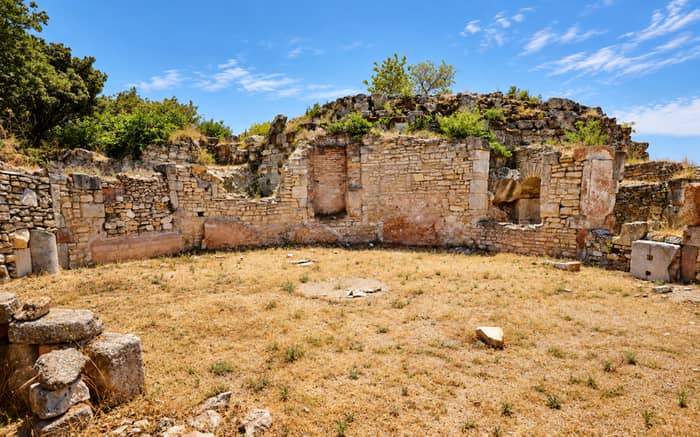
The Sanctuary of Apollo Smintheus, known as the Smintheion, lies at Gülpınar in the Ayvacık district of Çanakkale province. Its official address is Gülpınar Köyü, Babakale Kavşağı No:1, Ayvacık, Çanakkale, at the junction for the coastal village of Babakale.
The site is considered one of the most important sanctuaries of the Late Hellenistic period in Anatolia. According to the Turkish Ministry of Culture and Tourism, it was the second most important sanctuary in the Troad after the Temple of Athena at Troy.
Apollo, Lord of the Mice
The epithet Smintheus means "Lord of the Mice". Here Apollo was honoured as the god who protected farmers and their crops from mice, and this is the only known Apollo cult in Anatolia associated with the mouse.
The ancient geographer Strabo tells the legend behind the cult. Settlers from Crete had been told by an oracle to make their home wherever they were attacked by "the earth-born". When they reached this area, mice gnawed through their equipment during the night; believing the prophecy fulfilled, they settled here and worshipped Apollo as Smintheus.
The name appears at the very start of the Iliad, when Chryses, the priest of Apollo, prays to "Smintheus" for revenge against the Greeks. The prayer sets off the plague that opens Homer's story of the Trojan War.
The Temple and Its Trojan War Friezes
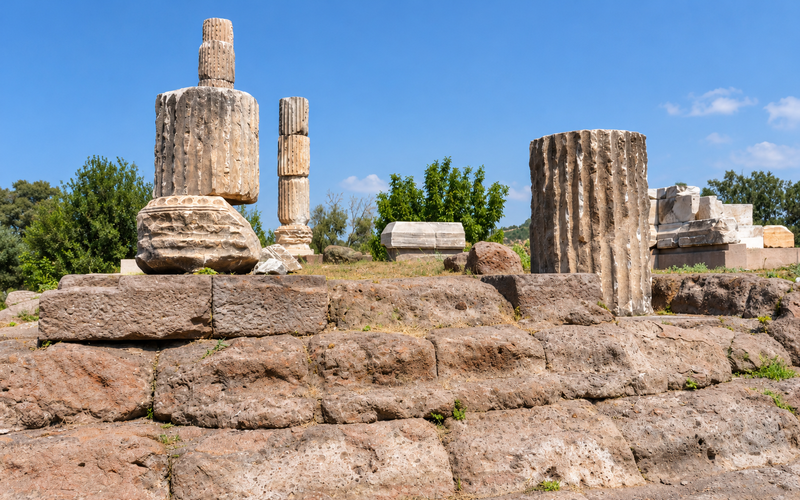
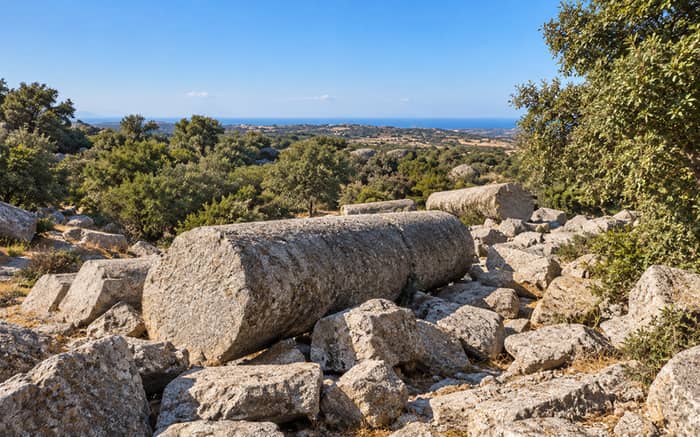
The heart of the sanctuary is the Temple of Apollo Smintheus, built in the Ionic order around 150 BC. Its pseudodipteral plan, with a wide space between the walls and the surrounding columns, is attributed to Hermogenes, one of the leading architects of the Hellenistic age. The temple has 8 columns on its short sides and 14 on its long sides.
What makes the temple truly unique are its relief friezes depicting scenes from the Trojan War as told in the Iliad. According to the Ministry, about 24 metres of the roughly 120-metre frieze have been recovered so far. Restoration work is ongoing, and part of the temple has been re-erected to show its original architecture.
The Lost Statue of Apollo and the Mice on the Steps
In the temple's inner sanctum (naos), excavators found a 110-centimetre fragment of a leg from the cult statue of Apollo, which ancient sources attribute to the sculptor Skopas of Paros. The statue, which also appears on Hellenistic coins of Alexandria Troas, is thought to have stood around 5 metres tall and to have shown Apollo with one foot resting on a mouse.
Today, life-size mouse sculptures commissioned by the excavation team greet visitors on the temple steps, while foot sculptures based on the lost statue are displayed on the museum terrace. You can read more about the city whose coins preserved the statue's image in our Alexandria Troas guide.
What Else Is in the Sanctuary?
The Smintheion was far more than a single temple. Around it, excavations have uncovered the buildings that served priests and pilgrims:
- An altar where sacrifices were offered to the gods
- A sacred way and a bridge leading to the sanctuary
- Roman baths used for ritual cleansing and bathing
- Water channels and cisterns that supplied the baths
- Streets once lined with statues and inscriptions
- A heroon (a hall honouring notable individuals) and villas
The history of the site goes back much further than the Hellenistic period. According to the Ministry of Culture and Tourism, traces of a Chalcolithic settlement dating to around 5200–4800 BC have also been found here.
Excavations
According to the Ministry, excavations at the Smintheion were led from 1980 by Prof. Dr. Coşkun Özgünel. Since 2020, work has continued under a team from Ondokuz Mayıs University led by Prof. Dr. Davut Kaplan, with permission from the Ministry of Culture and Tourism. Each season brings new finds that shed light on different periods of the sanctuary.
Visiting the Smintheion: Practical Tips
- Opening days: The site is open every day. Summer and winter hours differ, so check the official site page before you go.
- Admission: There is an admission fee, payable in euros for non-Turkish citizens. Children under 8 enter free. Check the official page for current prices.
- The friezes: The small exhibition space where the temple friezes can be seen is open to visitors during the excavation season.
- How long to stay: Allow about 1 to 1.5 hours to explore the sanctuary at a relaxed pace.
- What to bring: There is little shade on site. In summer, bring a hat and water, and wear comfortable shoes.
How to Get to the Smintheion
The sanctuary is at the Babakale junction in Gülpınar. Enter "Apollon Smintheion" into your navigation app to find the entrance. If you are travelling by public transport, the Turkish Culture Portal notes that minibuses run from Çanakkale city centre to Gülpınar.
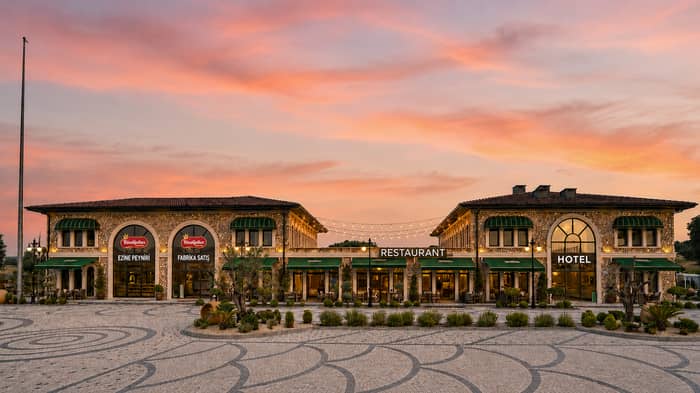
From our hotel, we recommend combining the Smintheion with Assos and Babakale as a day trip through the Ayvacık area. Directions to our hotel are on our Location & Getting Here page.
Nearby Places Worth Combining
- Babakale: This small coastal village near the Smintheion lies at the westernmost point of mainland Asia and is known for its Ottoman castle.
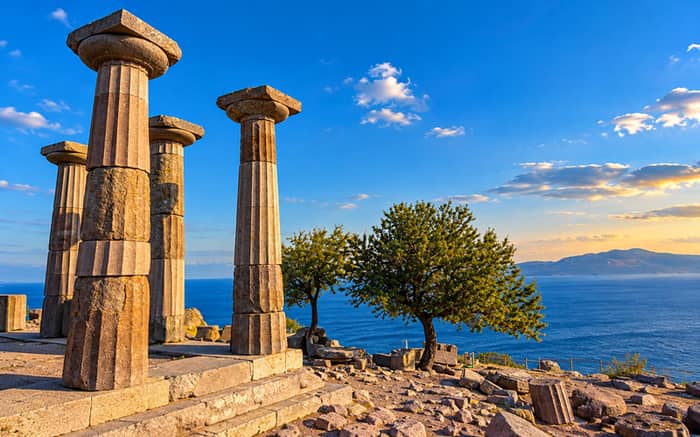
- Assos: Famous for its Archaic Temple of Athena and its views over the Aegean, Assos is the highlight of any Ayvacık day trip and the place where St Paul rejoined his ship after walking from Troas.
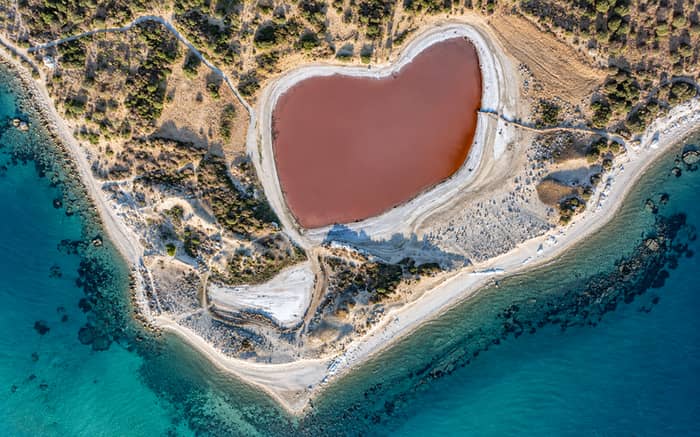
- Alexandria Troas and the Pink Lake: The great Roman port of the Troad and its former inner harbour, now a lake that turns pink at certain times of year, lie further north along the coast.
Back at Our Hotel
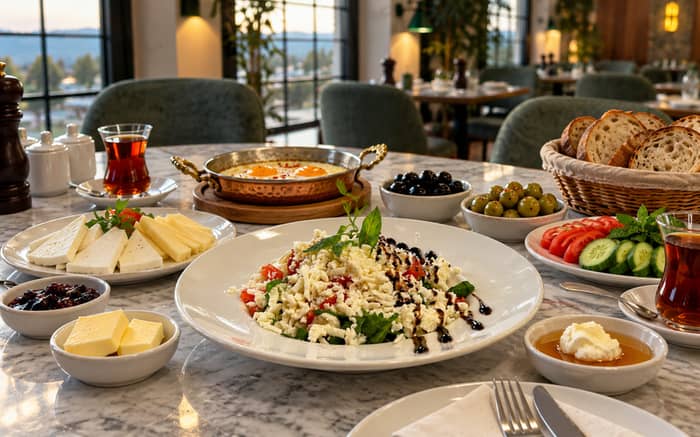
After a day in Ayvacık, you can end the evening at our restaurant, open daily from 08:00 to 23:00 and serving the traditional flavours of the North Aegean. Breakfast is included for hotel guests, with the Ezine cheese our family has made since 1953 at the centre of the table.
You can view our rooms and book directly with us.
Temple of Apollo Smintheus: Visitor Questions
What does Smintheus mean?
Smintheus means "Lord of the Mice". The Smintheion is the sanctuary dedicated to Apollo Smintheus; you will also see it called the Temple of Apollo Smintheus or the Apollon Smintheion.
Why is it known as the mouse temple?
Apollo was worshipped here as the god who protected farmers from mice, and the mouse was his symbol. The lost cult statue is also thought to have shown Apollo with one foot on a mouse, which is why mouse sculptures now stand on the temple steps.
Is there an entrance fee for foreign visitors?
Yes. Non-Turkish citizens pay an admission fee in euros, while children under 8 enter free. As prices can change, please check the official page of the Turkish Ministry of Culture and Tourism before your visit.
Which district is the Smintheion in?
The Smintheion is at Gülpınar in the Ayvacık district of Çanakkale. Some sources place it in the neighbouring Ezine district, but its official address is in Ayvacık.