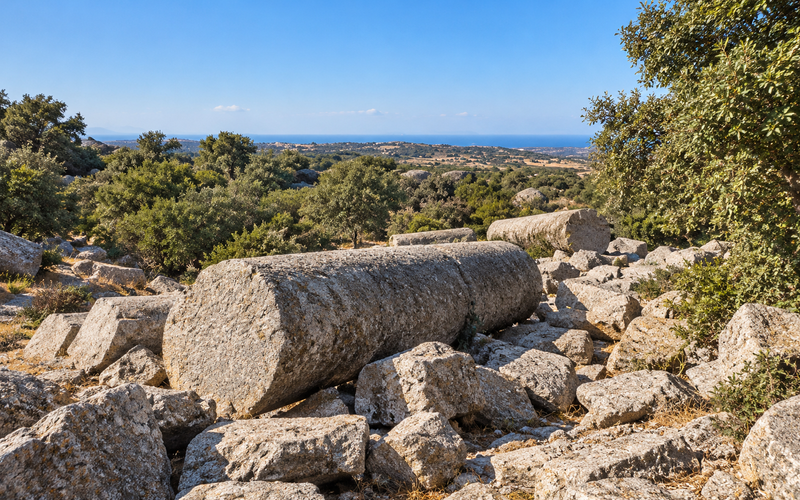
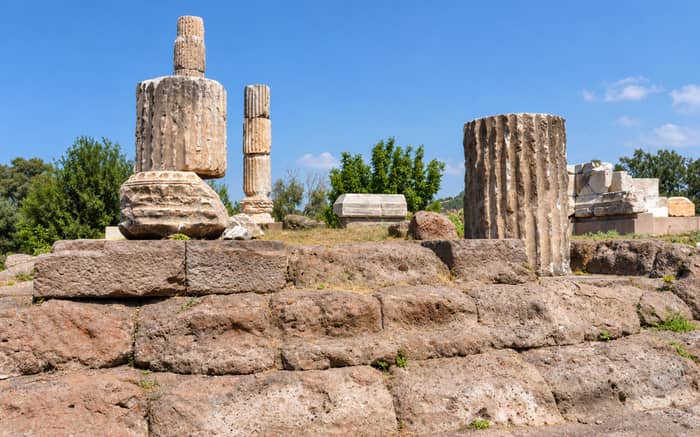
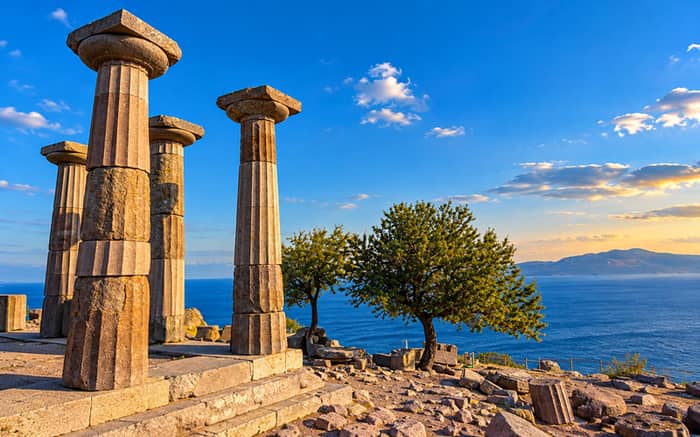
At the end of a country road near Ezine, on the slopes of Mount Çığrı, a remarkable sight awaits: giant granite columns, cut from the bedrock and shaped by Roman stonemasons, still lying exactly where they were left almost two thousand years ago. Granite from these hills was shipped across the Mediterranean, yet these columns never left the quarry. In this guide, we tell the story of the ancient column quarries at Yahyaçavuş and share what you need to know before you visit.
Where Are the Ancient Column Quarries?
The quarries lie within the boundaries of Yahyaçavuş village in the Ezine district of Çanakkale province, on the foothills of Mount Çığrı (Çığrı Dağı). The Troas Culture Routes project records the site at a locality called Göztepesi. The village was formerly known as Koçali, so some sources refer to the quarries by that name.
The columns lie about 2 km outside the village. Because the site is close to the ancient city of Alexandria Troas, the two are easy to visit on the same day.
One Quarry, Many Names
You may come across this site under several names. Locals call the columns Yedi Taşlar ("the Seven Stones") or Yedi Sütunlar ("the Seven Columns"). In academic literature, the granite quarries of the area are often called the Kestanbol quarries, after the nearby Kestanbol area, and the stone itself is known as Troad granite. The Troas Culture Routes project presents the site as the Ancient Column Quarries. All of these names refer to the same place and the same granite columns.
Giant Columns, Never Finished
The most striking pieces in the quarry are seven large columns that were almost fully worked. According to the Troas Culture Routes project, they are on average about 11.5 metres (around 38 feet) long and about 1.40 metres in diameter.
Measurements by geologists from Istanbul University, published in a scientific study, found that the largest column reaches 11.55 metres in length and 1.58 metres in diameter. According to the same study, each column weighs around 60 tonnes. Many other unfinished architectural pieces lie scattered around the columns.
The columns date from the Roman period. Sources give their age as roughly 1,600 to 2,000 years; the range reflects the fact that the quarries were worked over several centuries.
How Troad Granite Spread Across the Roman World
The grey granite from around Mount Çığrı was prized in antiquity for its hardness and durability. The Ostia Antica Archaeological Park in Italy notes that this stone, known to scholars as granito troadense, was quarried from the reign of Hadrian (AD 117–138) onwards, and that Yedi Taşlar and Kestanbol are its best-known quarry sites. Turkish academic studies suggest production peaked from the 2nd century AD and probably continued until the early 4th century.
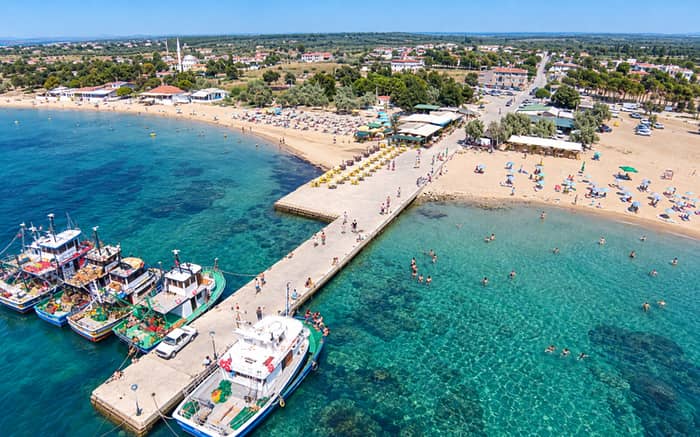
Columns worked in the quarries were hauled overland to the nearby harbour of Alexandria Troas and shipped from there. Research shows that this granite reached around 40 sites around the Mediterranean, including Rome, Ravenna, Tarragona in Spain, Leptis Magna in Libya and Istanbul.
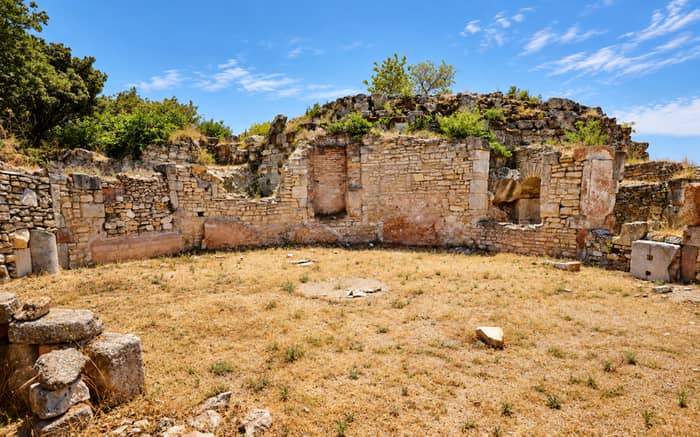
You can still see traces of this trade today: at the ancient harbour of Alexandria Troas, giant granite columns lie in the sea along the shore. Read more about the harbour and the city's other monuments in our Alexandria Troas guide.
Why Were the Columns Left Behind?
The columns are thought to have been prepared for an order that never reached its buyer. Archaeologists from Çanakkale Onsekiz Mart University link their abandonment to economic and political changes in the Roman world.
Which building the columns were intended for remains unknown. Much like the Unfinished Obelisk at Aswan in Egypt, the site offers a rare glimpse of how a great ancient building project was planned, and how it could be abandoned halfway.
How Did the Romans Cut Granite?
To split large blocks from the bedrock, ancient quarrymen cut a row of wedge holes along the planned line and drove wedges into them until the rock cracked. Wooden wedges swollen with water are often mentioned, although iron wedges were also widely used in Roman quarries.
Once a block had been freed, it was roughly shaped into a column in the quarry itself and prepared for transport. Because the quarries at Yahyaçavuş preserve pieces at different stages of this process, they work like an open-air museum of ancient stoneworking.
Before You Visit
- Facilities: The quarries are not set up as a museum or an official archaeological site. There is no ticket office, toilet or kiosk, so bring water and anything else you need.
- Finding the site: You can find the location on the Troas Culture Routes website (in Turkish) and in the project's interactive map. If you are unsure of the way, villagers in Yahyaçavuş can point you in the right direction.
- Terrain: The columns lie on a rocky, overgrown hillside. Wear closed, non-slip shoes.
- Protecting the site: The Turkish press has reported damage to some pieces in past years. Please do not climb on the columns or move any of the stones.
- Hiking: If you enjoy walking, you can follow the Yahya Çavuş stage of the Troas Culture Routes, which passes the quarries.
Suggested Day Route
Rather than visiting the quarries on their own, we recommend making them part of a day around Ezine. Start in the morning at the quarries, where the story of the granite begins, then drive on to Alexandria Troas to explore the harbour the columns were shipped from.
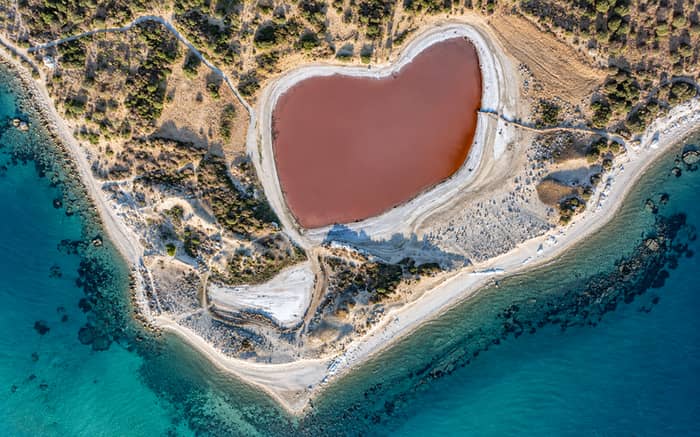
End the day at sunset by the Pink Lake (Heart-Shaped Lake), which formed in the old inner harbour of the ancient city. If you have another day, our Troy and Troy Museum guide will help you plan your visit to the region's most famous site. Directions to our hotel are on our Location & Getting Here page.
After the Quarries, a Taste of Ezine
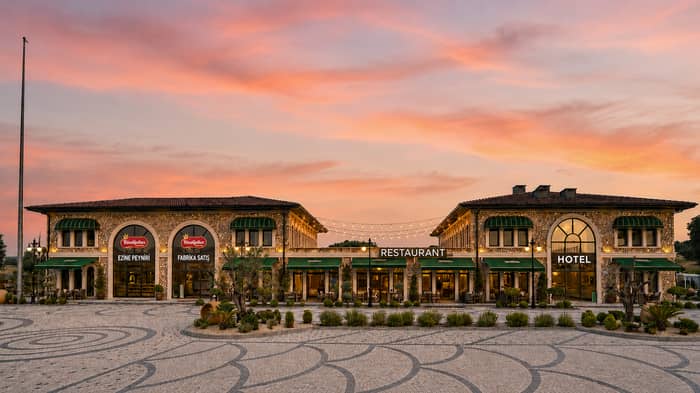
After a day of walking, you can end the day at our restaurant, open daily from 08:00 to 23:00 and serving the traditional flavours of the North Aegean.
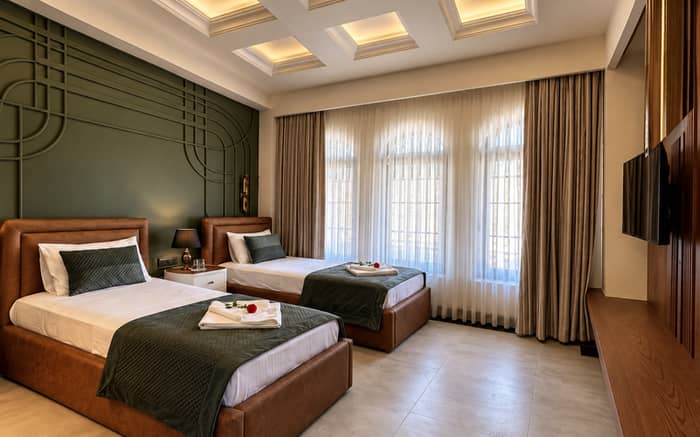
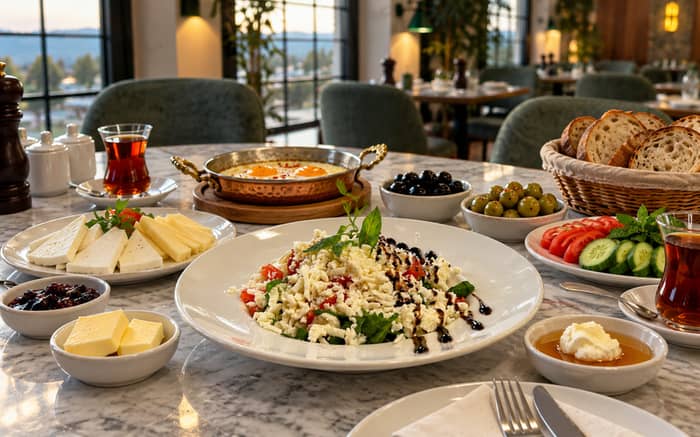
Every morning, hotel guests enjoy a village-style breakfast with the Ezine cheese our family has made since 1953. You can view our rooms and book directly with us.
Yahyaçavuş Column Quarries: What Visitors Ask
How old are the columns?
The columns date from the Roman period. Sources give their age as roughly 1,600 to 2,000 years, as the quarries are thought to have been worked over several centuries.
Were the columns meant for Rome?
It is not known which building the columns in the quarry were made for. However, research has shown that granite from these quarries was shipped to many cities around the Mediterranean, including Rome.
Are Yedi Taşlar and the Ancient Column Quarries the same place?
Yes. Yedi Taşlar ("the Seven Stones"), as locals call it, is the granite quarry at Yahyaçavuş that the Troas Culture Routes project presents as the Ancient Column Quarries.
Is there an entrance fee?
No. The quarries are on open land, with no ticket office or formal entrance. Please help protect the site during your visit.