In the Ezine district of Çanakkale, cheese means one thing. But what sets it apart from other white cheeses, how is it made, and why does it carry a geographical indication? As a family producing in the same region since 1953, we take you through each step.
What Is Ezine Cheese?
Ezine cheese is a white cheese matured in brine, made from the milk of animals raised in the Ezine, Bayramiç and Ayvacık districts of Çanakkale. What defines it is not only the method but where the milk comes from.
The vegetation and climate of the region shape what the animals eat. Milk from herds grazing the pastures at the foot of the Kaz Mountains gives the cheese its particular aroma and texture. The same method used elsewhere does not produce the same character.
What Does a Geographical Indication Mean?
A geographical indication is an official registration certifying that a product belongs to a particular area and is made under that area's conditions. Ezine cheese is one of the products protected in this way.
In practice: for a package to read "Ezine cheese", the milk must come from the registered area and production must follow the defined rules. For the buyer, that means knowing where the product comes from.
Which Milks Go Into It?
Ezine cheese is not made from a single milk. Sheep, goat and cow milk are combined in set proportions, and that blend is what determines both the taste and the structure of the cheese.
- ✓Sheep milk — gives the cheese its fat content, its richness and its characteristic aroma.
- ✓Goat milk — adds a distinct sharpness to the taste and depth to the aroma.
- ✓Cow milk — balances the texture and keeps the cheese from becoming too firm.
We source our milk from producers in the region. Collecting it daily is the first step that shapes the quality of the cheese.
How Is Ezine Cheese Made?
Production follows traditional methods. In outline, the process runs as follows:
- 1Collecting and preparing the milk. Sheep, goat and cow milk from local producers is blended in set proportions.
- 2Adding the rennet. The milk is brought to the right temperature, rennet is added and the curd is left to set.
- 3Cutting and draining. The curd is cut, drained to separate the whey, and pressed.
- 4Moulding and salting. The drained curd goes into moulds, is cut and then salted.
- 5Maturing in brine. The cheese is packed into tins and left to mature in brine. This is where the flavour settles.
How Is It Different from Ordinary White Cheese?
Ezine cheese is a type of white cheese: every Ezine cheese is a white cheese, but not every white cheese is Ezine cheese. The difference comes down to three things:
- Production area
- Limited to the Ezine, Bayramiç and Ayvacık districts.
- Milk blend
- Sheep, goat and cow milk used together.
- Registration
- Protected by a geographical indication.
How to Store and Serve It
Keep Ezine cheese in its own brine in the fridge. Out of the brine it dries quickly, the salt balance shifts and the taste changes. Taking it out about half an hour before serving lets the aroma open up.
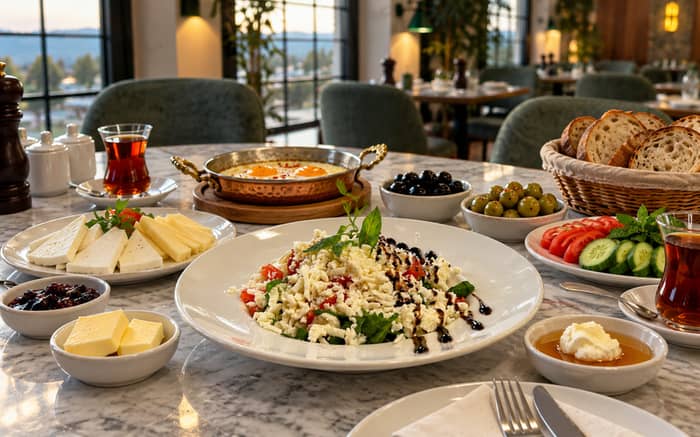
Serve it on its own at breakfast, with olive oil and oregano, or on warm bread. It is also widely used in börek and meze — and the cheese on our own breakfast table comes from the same production.
In the Same Region Since 1953
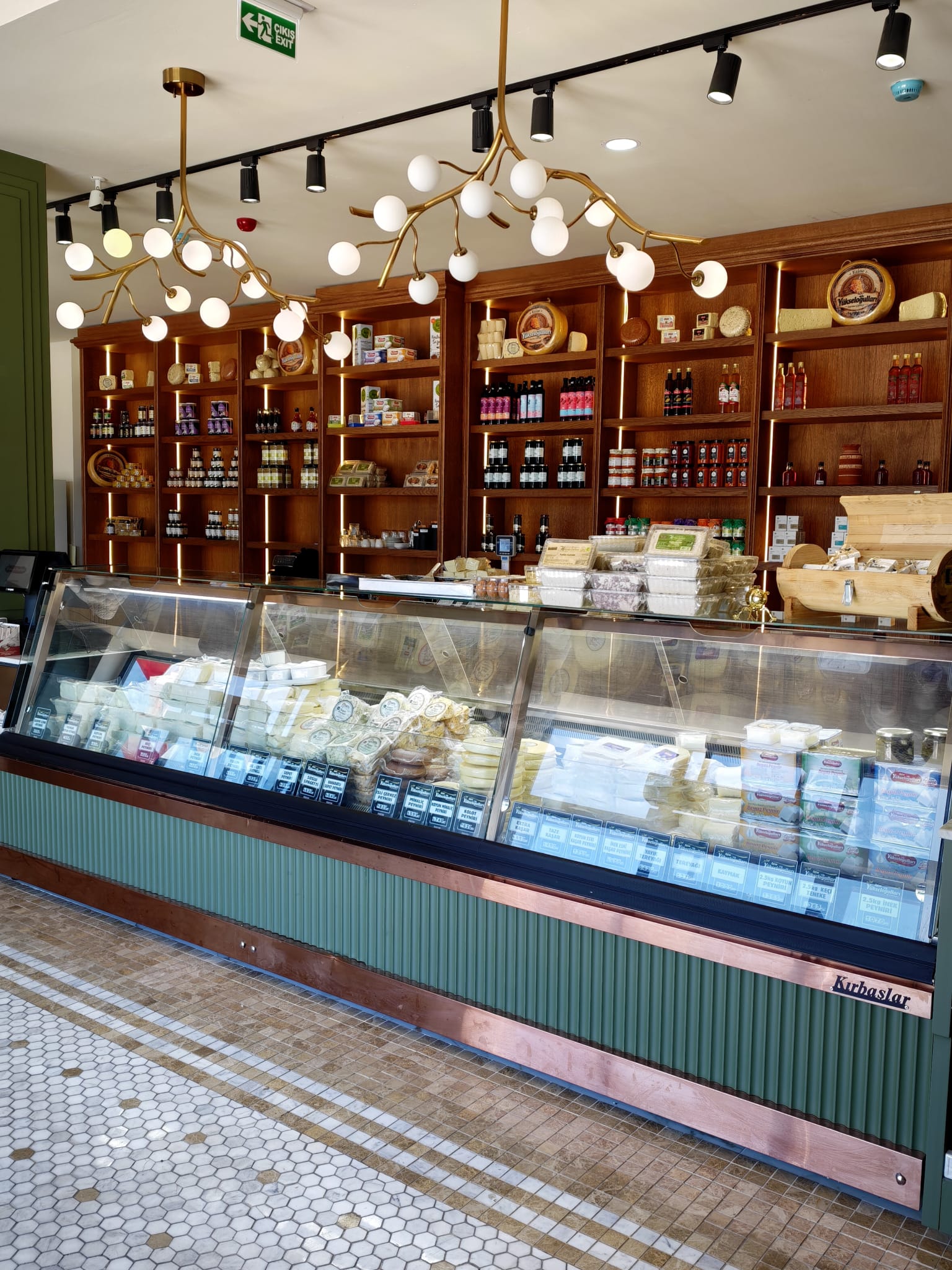
The Yükseloğulları story began in 1953, when our founder Mahir Yüksel started producing aged kaşar cheese in Ezine. In the years that followed the family moved to Ezine cheese, and the brand took the shape it has today.
For more than seventy years we have worked in the same region, in the same way. The cheese that reaches the table of anyone staying at our hotel or dining at our restaurant comes from our own facility.