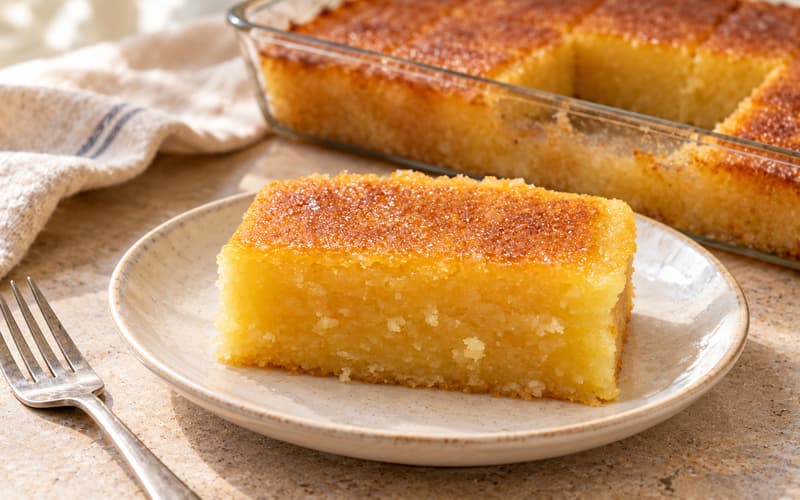
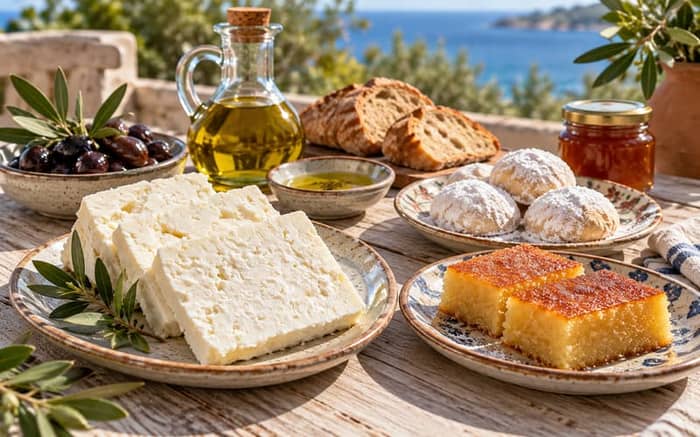
Peynir helvası is a Turkish cheese dessert worth looking out for on a trip through Çanakkale. Its baked version has a browned surface and a soft centre, with fresh cheese at the heart of the flavour. As a family producing cheese in Ezine, we have brought together the essentials: what to expect, how to choose it and how to make room for local food on your journey. There is also a short recipe for trying it at home.
What Is Peynir Helvası?
The name means “cheese halva”. Fresh cheese and sugar form its base, while flour, semolina or egg may appear in different recipes. The texture varies between makers: some versions have a fibrous consistency, while others are softer and eaten with a spoon. Baking adds a browned top to the cooked mixture.
Gelibolu Peynir Helvası has its own registered geographical indication in Türkiye, with a defined production method and geographical area. That specific designation should not be applied to every cheese dessert sold in Çanakkale or to every home adaptation.
Where It Fits Among Turkish Desserts
If you know halva as the firm sesame sweet sold in blocks, this will be a different experience. Peynir helvası is based on cheese, with a texture that depends on the recipe and serving temperature. It also differs from künefe, where cheese sits between layers of fine pastry strands.
You may find it served warm, cold, baked or without a browned top. For a first taste, a small plain portion makes it easier to notice the cheese flavour. Kaymak, a rich clotted cream, or plain ice cream can accompany it. Warm servings tend to feel softer; chilling makes the texture firmer.
Choosing the Right Cheese
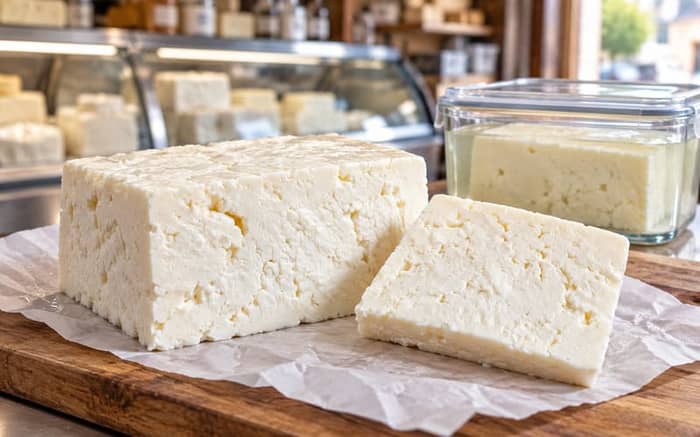
Traditional preparations use fresh, unsalted cheese. Brined, matured white cheese has a different flavour and structure, so the Ezine cheese you enjoy at breakfast is not a direct replacement in a dessert recipe.
Our guide to Ezine cheese and how it is made explains that ageing process. For the home version below, look for fresh, unsalted lor at a Turkish food shop. Check the label: products sold under similar cheese names can differ in salt and moisture.
Ricotta, cottage cheese and feta should not be treated as interchangeable ingredients. A substitution can change how the mixture cooks and tastes. Keeping to the specified cheese is more useful than choosing a substitute solely because it looks similar.
A Short Peynir Helvası Recipe for Home
This two-portion example uses lor as a home adaptation. Metric weights are the reference; the ounce equivalents are rounded.
Ingredients
- 160 g unsalted lor (5.6 oz)
- 40 g butter (1.4 oz)
- 50 ml water (1.7 US fl oz)
- 1 egg yolk
- 50 g semolina (1.8 oz)
- 100 g sugar (3.5 oz)
Method
- Blend everything except semolina and sugar. Stir over medium heat until bubbling.
- Thicken with semolina, then dissolve the sugar.
- Spread just over 1 cm thick in an ovenproof dish. Brown in a preheated oven at 200°C/390°F, top heat, for about 10–12 minutes.
- Rest for 15 minutes.
Cheese moisture and oven performance affect the result. Watch the surface while it browns and avoid letting it blacken. The temperature above refers to top heat, not a fan setting. Increasing the quantity without changing the dish can also change the cooking time.
Buying Peynir Helvası During Your Trip
At a local sweet shop, ask which version is available and whether it is best eaten straight away or packed for later. A portion to share after lunch and a box for the journey home call for different planning. A browned surface alone does not tell you how fresh the dessert is.
- Check the ingredients: Ask about the cheese and whether the recipe contains flour, semolina or egg, particularly if you have dietary requirements.
- Read the label: Check the date and storage instructions on packaged products. Ask the seller for these details when buying loose portions.
- Plan the journey: Use a cool bag for products that need refrigeration and avoid leaving them in a hot car.
A shop-bought product’s stated shelf life should not be used for a homemade dessert. Its packaging, production method and storage conditions may be different.
A Local Food Stop in Ezine
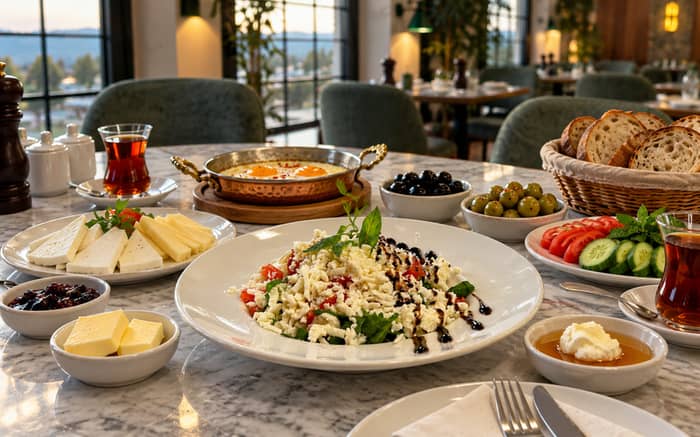
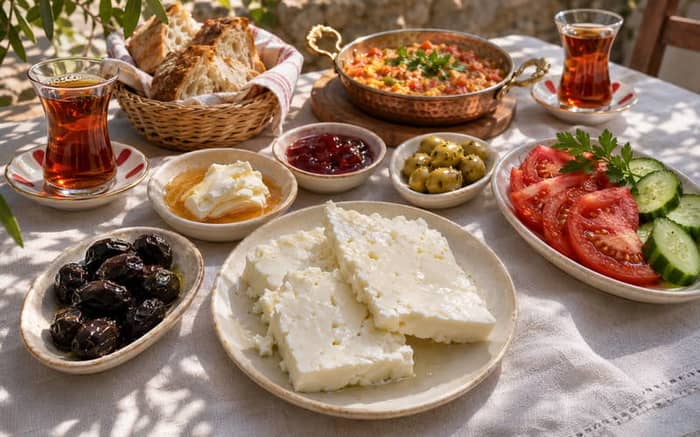
Discovering peynir helvası is one way into the dairy traditions of the Çanakkale region. In Ezine, you can continue that discovery over breakfast and while shopping for local produce. Our family has made Ezine cheese since 1953, and our own cheese is part of the breakfast served at the hotel.
The shop beside our restaurant sells Ezine cheese, butter, olive oil and other regional products. If you are travelling onward, choose chilled purchases with the remaining journey in mind.
For ideas beyond the table, explore our guide to Ezine and the Troad. Combining one main outing with an unhurried meal and a little shopping leaves room to enjoy the area. Our hotel is on the Çanakkale–İzmir road, making a food stop easy to include in your travel plans.
Peynir Helvası: Quick Questions
Does this recipe contain tahini?
No. This version contains no tahini. Cheese halva and sesame halva are different sweets; check the ingredient list when buying a packaged product.
Is peynir helvası gluten-free?
This recipe contains semolina, so it is not gluten-free. Other versions may use wheat flour. The example above also contains dairy and egg.
How long can I keep the homemade dessert?
Divide it into small portions, cool promptly, refrigerate in a covered container and eat within 2–3 days. Follow the producer’s own storage and use-by instructions for purchased products.
Whether you are staying with us or passing through Ezine, you can find out more about our restaurant and breakfast before you arrive. A meal, a few regional products and time to explore can make local food a memorable part of your stay.