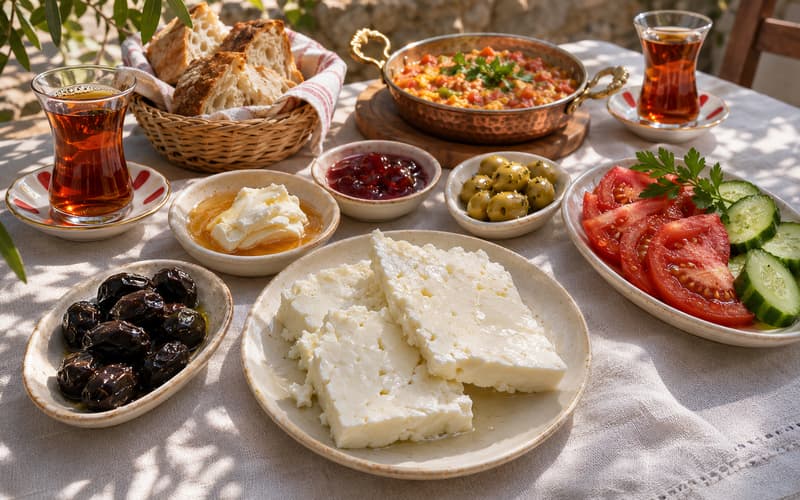
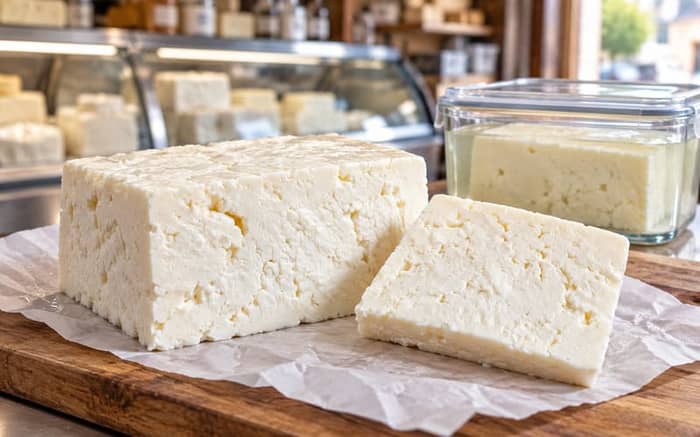
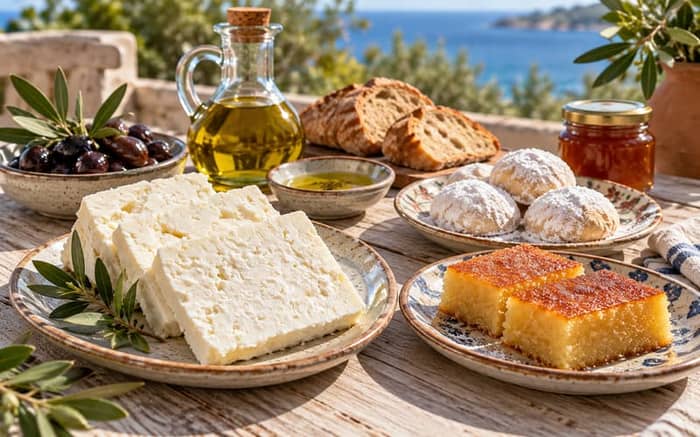
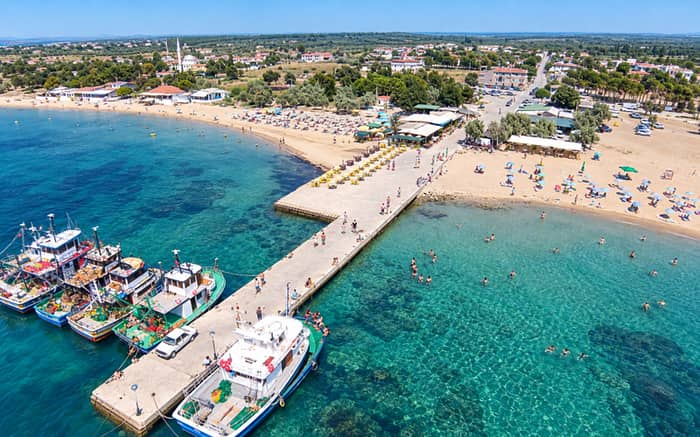
At a Turkish breakfast in Ezine, start with a piece of white cheese before you put anything else on your bread. It’s a good way to taste the place you’ve come to visit. In Bozeli, a village in the district of Ezine in northwestern Türkiye, our family has been making cheese since 1953. The Ezine cheese we serve for breakfast comes from our own dairy. The olives, bread and little dishes around it will look familiar once you’ve spent a few mornings in Türkiye; the cheese is a reason to remember this particular one.
What is a Turkish breakfast?
The Turkish word for breakfast is kahvaltı. On an ordinary morning, it might mean a sesame bread ring, a piece of cheese and a glass of tea. Sit down for a leisurely village breakfast and the same ingredients become the beginnings of a much larger meal: olives and sliced vegetables, honey or preserves, eggs straight from the pan and bread to bring everything together. Both meals are recognisably Turkish. The difference is partly where you are and partly how much time you have.
One detail can surprise a first-time visitor: the sweet things arrive alongside the savoury ones. The honey isn’t waiting for a dessert course. You can put some on bread, have a bite of salty cheese next and go back to the eggs while they’re warm. There’s no prescribed order. A table of four can share the same spread and still eat four quite different breakfasts.
Reading the menu: serpme kahvaltı or a breakfast plate?
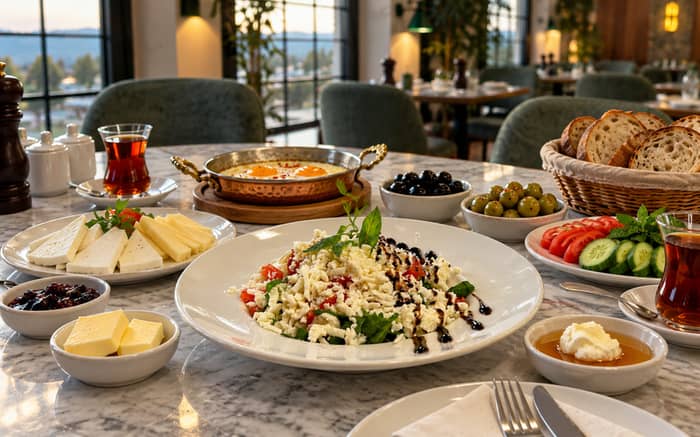
Serpme kahvaltı means a spread brought to your table in separate dishes for sharing. You help yourself from those dishes onto your own plate. It’s different from a buffet, where you walk up to choose your food, and from a kahvaltı tabağı, a composed breakfast plate usually intended for one person. If you’re travelling alone and want something modest before visiting a site or catching a ferry, that second phrase is useful to recognise.
You may also see köy kahvaltısı, or village breakfast. That describes the style of the food, often with an emphasis on local produce. It doesn’t tell you how many people the order serves or which hot dishes come with it. A breakfast can be both köy and serpme: village-style food served as a shared spread. Before ordering extra eggs or pastries, ask what comes with the table that morning.
Turkish breakfast dishes: what’s on the table?
White cheese, kaşar and the cheese that gives Ezine its name
Beyaz peynir means white cheese. At breakfast it generally refers to a brined white cheese, eaten in slices or small pieces rather than spread on bread. If you also see a pale yellow cheese cut into neat slices, it may be kaşar, a firmer Turkish cheese. Try a little of each on its own. Even before you notice the change in flavour, you’ll feel the difference in texture.
Ezine cheese belongs to the white-cheese family, but Ezine is a place, not the Turkish word for white cheese. The origin of the milk and the way the cheese is made matter. Here at Yükseloğulları, the cheese on your plate has a short journey from our dairy to our restaurant. If that first bite makes you curious, our guide to what Ezine cheese is and how it’s made explains the milk blend and what happens as the cheese matures in brine.
Olives, tomatoes, cucumbers and olive oil
A breakfast spread often includes both olives and a plate of fresh vegetables. Tomato and cucumber slices give you something juicy between bites of cheese; a little olive oil on a ripe tomato can be enough dressing. If you’re used to having olives only as an appetiser in the evening, try one with bread and cheese. They make as much sense beside a glass of breakfast tea as they do before dinner.
There’s no need to build a sandwich unless you want one. Tear a small piece of bread for the cheese, take a slice of cucumber on its own, then use another piece of bread to pick up the tomato juices and olive oil left on your plate. That last bite is a particularly good reason to keep a little bread in reserve.
Bal and kaymak: the two small dishes to try together
Bal is honey. Kaymak is a rich cream, close to clotted cream in texture. The two may arrive together or in separate dishes. Spread a little kaymak on bread and add just enough honey to taste both. If you’re choosing between butter and kaymak, try the same honey with each: butter gives a firmer, more buttery bite; the cream is soft and lets the honey run into it.
The other sweet bowls are often reçel, or fruit preserves. If there are several, ask which fruit went into each. Colour alone doesn’t always tell you. A slightly tart preserve is lovely with white cheese, especially if you prefer a less sweet breakfast but still want to try what’s on the table.
Menemen, eggs with sucuk and warm börek
Menemen is an egg dish cooked with tomatoes and green peppers. The eggs are often folded through the vegetables, so a forkful brings up some of each and there’s usually juice left for a piece of bread. If you know shakshuka, the combination will sound familiar. A useful distinction is that shakshuka typically has whole eggs set into a tomato sauce; in menemen the egg and vegetables often come together more loosely. Cooks have their own preferences, so don’t expect every pan to look alike.
Sucuklu yumurta is a different choice: eggs cooked with slices of spiced sausage. Sahanda yumurta means eggs cooked in a shallow pan, a useful name if you’d prefer the eggs without sausage. Another warm item you may encounter is börek, a savoury pastry whose filling varies. If you want a meat-free breakfast, ask what’s inside the börek as well as which egg dishes are available. A golden pastry gives very little away from the outside.
Simit, bread and Turkish tea
Simit is the sesame-coated bread ring you’ll see at bakeries and street stalls. Its crust makes it a good match for a slice of cheese. Softer bread is better for scooping up menemen or catching the last of the honey. A village breakfast may have warm bread or börek rather than simit. There’s no fixed bread basket that every restaurant in Türkiye is supposed to serve.
The usual drink is çay, Turkish black tea, often served in a small tulip-shaped glass. If yours is stronger than you like, ask for açık çay, a lighter pour. Demli is the word for a stronger one. Turkish coffee is a separate drink; many people enjoy it after the table has been cleared. If you’re wondering why coffee hasn’t arrived with your eggs, the tea already on the table is the traditional pairing.
How to order a shared breakfast without ordering twice
Imagine two of you sit down and both like the sound of menemen. Before ordering a spread and two pans of eggs, find out whether you can choose menemen as part of the breakfast. Then ask how it’s served. One pan brought to the middle may be exactly what you wanted. The same question helps if one person wants a full breakfast and the other only wants tea and a pastry.
- “Kahvaltıya neler dâhil?” — What’s included in the breakfast?
- “Menemen dâhil mi?” — Is menemen included?
- “Kaç kişilik?” — How many people does it serve?
Once the food arrives, serve a little from the shared dishes onto your own plate and see what you enjoy. The hot pan is worth tasting early. The preserves will wait, and you may discover that the combination you want more of is simply white cheese, a slice of tomato and warm bread.
Where to try a village breakfast in Ezine
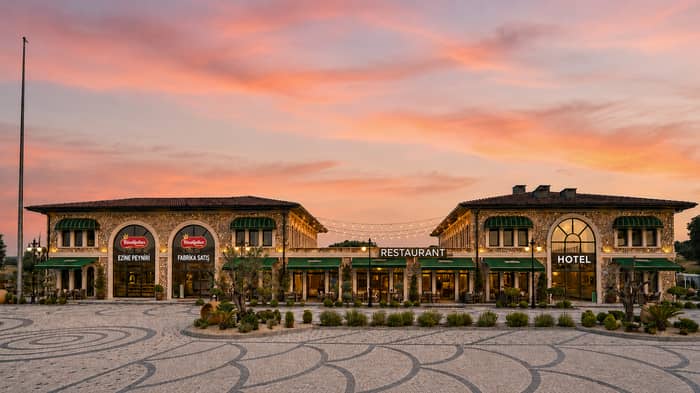
Our restaurant is in Bozeli, on the Çanakkale–İzmir road. We serve a village spread with our own Ezine cheese, kaşar and butter, alongside regional olives and olive oil, honey, kaymak and homemade preserves. The table changes with the season. Our breakfast page describes the village breakfast we serve in Ezine, including the breads and egg options you can expect.
Breakfast starts at 8:00 a.m. Guests staying at Yükseloğulları Hotel have breakfast included in their room rate, and travellers can also visit the restaurant without staying overnight. If you’re planning a driving day, our guide to stopping for breakfast on the Çanakkale–İzmir road covers the practical details. If you’d rather wake up here and sit down to breakfast before setting off, you can check availability for a stay with breakfast.
Turkish breakfast FAQ
Is a Turkish breakfast suitable for vegetarians?
There are plenty of meat-free foods to choose from, including olives, vegetables, bread, honey and preserves. If you eat eggs, plain menemen is an option to ask about. Sucuk is sausage, and börek can have a meat filling. If you avoid animal rennet as well, ask about the cheese rather than assuming every variety suits you.
Can one person order a Turkish breakfast?
Yes, but a restaurant may have a minimum order for its shared spread. Ask whether there’s a kahvaltı tabağı for one, or order an individual hot dish with bread and tea if that’s available. You don’t need a tableful of dishes to experience a Turkish breakfast.
How can I put together a simple Turkish breakfast at home?
Choose one white cheese, a few olives, good bread and whatever tomatoes or cucumbers are in season. Add honey with cream or butter, brew black tea and bring one pan of eggs to the table. Put the dishes in the middle so everyone can choose. That gives you the pleasure of the shared meal without needing a different dish for every ingredient you tried on holiday.